

The Second Job You Didn’t Sign Up For. Unpaid, unseen, unrecognised.
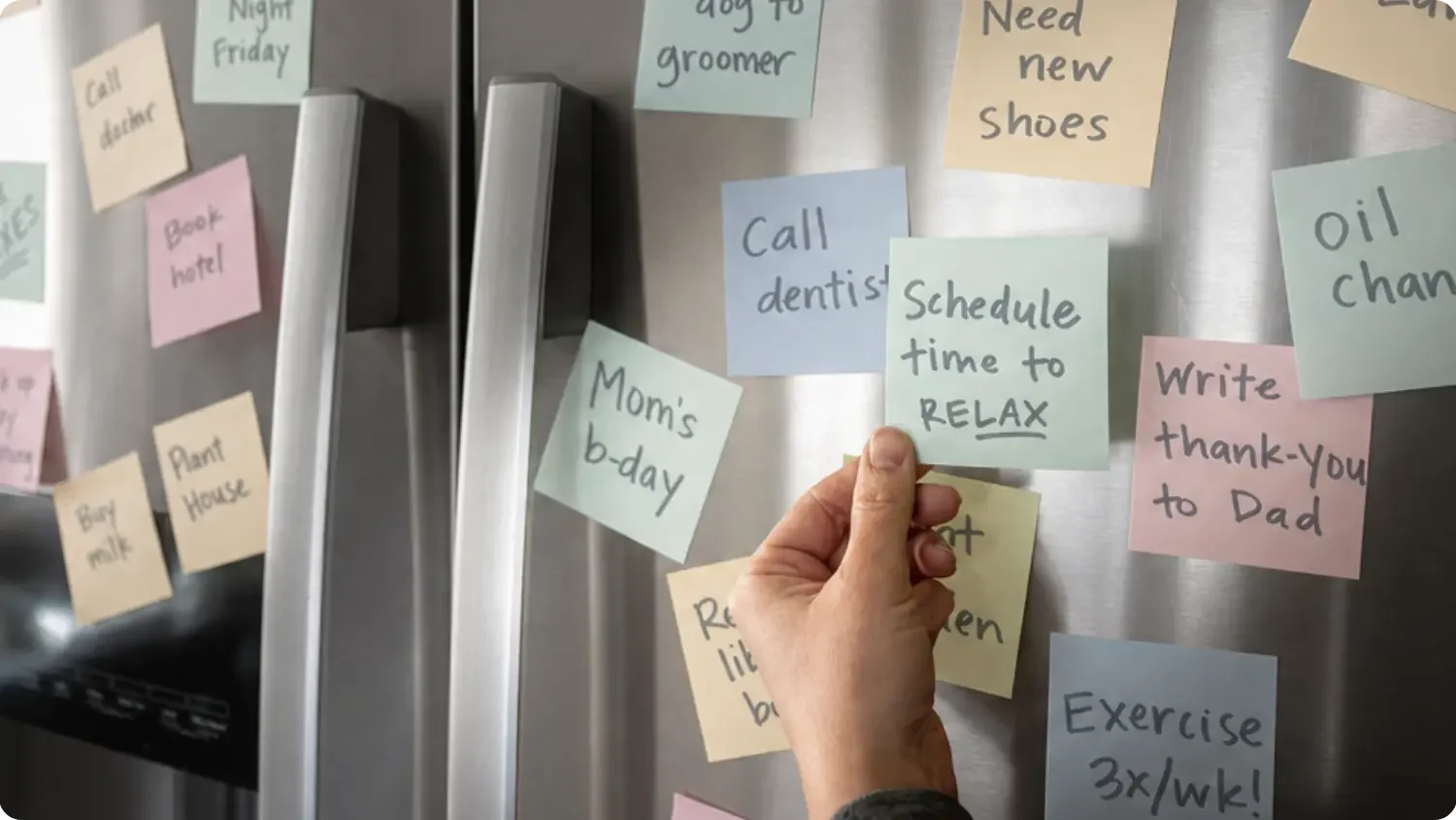
Nobody put it in a contract.
There was no interview, no offer letter, no salary negotiation. No job description outlining the scope, the hours, or what success looks like. And yet here you are - running a second job alongside the demanding one you actually chose, trained for, and you’re very good at.
It probably started pre-children when you were more than happy to take the driving seat when it came to things-around-the-home. You could have things as you liked them. And you maybe work wasn’t quite as full-on then as it is now.
Now is a different picture entirely. You went back to work after having children as soon as you could and now your life is made up of two full-time jobs.
When you look at it, no individual thing on its own seems insurmountable. A school consent form here, a dentist appointment there. A payment to make. A document to download. A new cleaner to find in a hurry. Someone needs to remember when the boiler service is due and book a plumber who will actually turn up when you’re at home. Someone needs to check whether the summer holiday dates clash with the sports camp, and if they do, work out what to do about it.
That someone is always you.
Not because you're the only capable adult in the house. Not because anyone sat down and decided it should work this way. It just happened because you were the one who knew how everything worked, where everything was and it was just easier. Gradually and without discussion, this moulded into the shape of your life. And now it's so embedded that questioning it feels too hard.
What the job actually involves
If you were to write the job description - fully - it would be pretty extraordinary.
Chief scheduler. Lead researcher. Primary contact for every school, tradesperson, medical practice, and utility provider associated with the household. Out of Hours First Responder for anything unexpected. Keeper of every password, preference, and renewal date. Knowledge Bank to confirm when the car is due a service, which child needs new shoes, has allergies, and no longer eats meat. Knows that your mother's follow-up appointment needs booking before the end of the month and that the orthodontist has called twice chasing for payment.
Oh, and this role is performed largely in the margins of an already an over-stretched working day. Early mornings. Lunch breaks. The twenty minutes before anyone else is up. The mental processing which happens during the commute, the conference call, the supposedly restorative weekend.
No annual leave. No sick days. No performance review where someone tells you you're doing a great job. No salary and very little thanks.
The visibility problem
The particularly corrosive thing about this second job is that it's almost entirely invisible to everyone else.
When it's done well - when the household runs smoothly, when nothing falls through the cracks, when everyone has what they need - nobody notices. That's the point. The mark of a well-managed home is that it appears to manage itself.
Which means the effort behind it goes unseen and unacknowledged. And that isn’t because the people around you don't care, it’s because they genuinely don't see it. The mental load, the forward planning, the ten decisions made before breakfast - none of it registers as work, because it doesn't look like work.
It just looks like life running normally.
And when you're exhausted by it - when the second job has gradually drained the reserves you needed for yourself - that's invisible too. Because you are, as ever, keeping it all together.
The cost nobody calculates
There's a version of this conversation which is about fairness, about the division of domestic labour, and about societal inequality. All of it is real, alive and very much worth having.
But there's another version which is simply about one person’s capacity.
You have a finite amount of energy, attention, and cognitive bandwidth each day. Every hour spent managing your home life is an hour not spent on work you find meaningful, taking you further in your career, the relationships you want to invest in, the rest your body is craving. Every email, every tiny decision, every logistical conundrum, consumes more of you and leaves less of you.
What changes when someone else is there to support you
The practical answer is easy to picture, but at the end of the day it's not really about emails and appointments. A Home-Life EA is someone negotiating with the builder. Chasing for an ADHD assessment to send the school. Pushing back on a quote which has crept up for no apparent reason. Reacting fast when there is something slipping between the cracks, and proactively noticing and pointing out something which might be about to. The kind of thing you'd normally have to do yourself, because it needs a person on the phone, not a form filled in.
The bigger difference is harder to define.
It's the five minutes you steal for yourself outside on a sunny day The coffee you made time for with an old friend. Breathing room to sit with your children in the evening and actually be there and hear about their day, rather than thinking two steps ahead to tomorrow. The school performance you made it to, and realising you’re enjoying the company of your partner instead of only talking about weekend logistics. Room to allow fun back into your life and even, to have time for yourself.
That's what a Home-Life EA gives back. Not only a shorter list and more headspace. A different way of living your life.
If you're ready to think about how it would feel to hand over your second job, or you just want to find out how it would work in reality, booking a quick call with our Founder, Sue Reeve is what to do next.